


Ethics in the digital future
I combine efficiency with responsibility for an ethically sound digital transformation. Secure, transparent, people-centered.

My stance
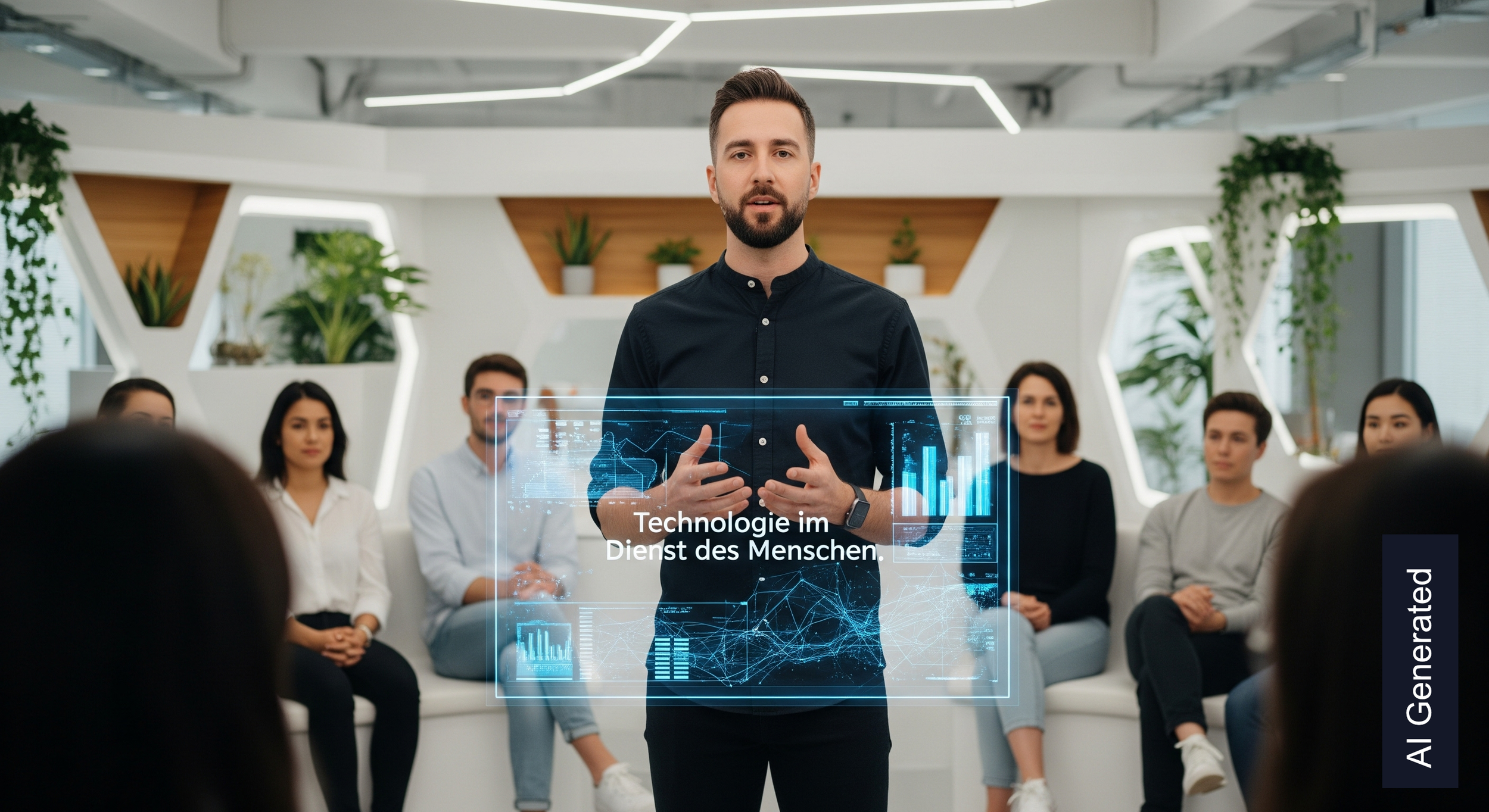
Small and medium-sized enterprises now have the opportunity to use AI in a way that empowers people's work rather than replacing it.
AI does not replace people. AI frees people from routine tasks so that talent can be applied where it creates value.
My approach
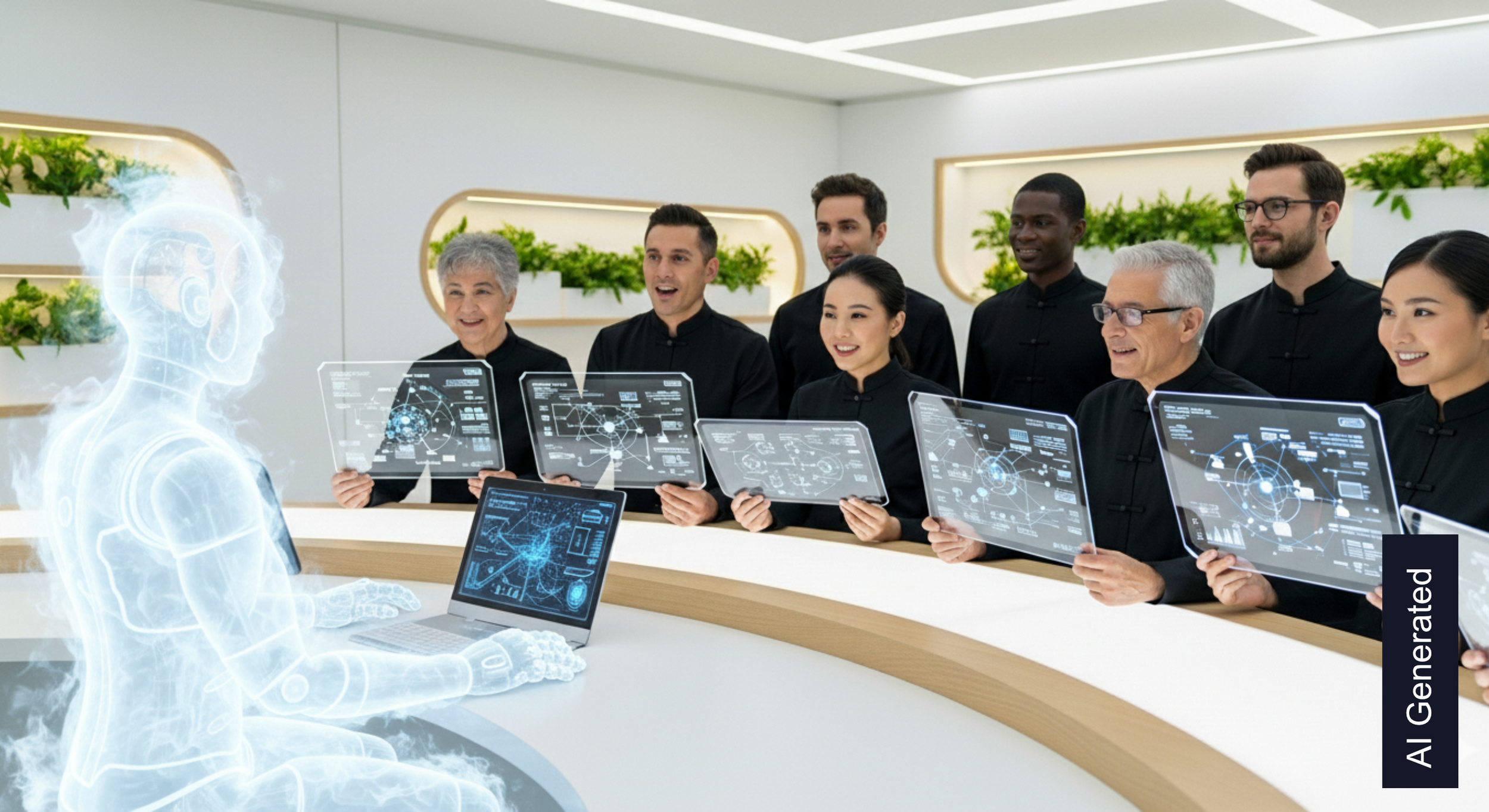
I develop AI solutions that keep people involved in all crucial steps. AI provides speed, suggestions, and structure, but the relevant decisions, prioritizations, and final approvals remain with humans.
This ensures that processes remain understandable, verifiable, and fair.
My goal
AI should take the pressure off people so that they can concentrate on judgment, empathy, creativity, and customer focus. That is precisely where the difference arises that no machine can replace.
What is important to me:
Human-in-the-loop: Employees check, control, and decide. AI supports, but does not replace.
Traceability: Every automation process has a clearly defined "exit to human" so that exceptions and sensitive cases can be handled by humans at any time.
Empowerment instead of uncertainty: We design projects in such a way that teams become confident in working with AI—with clear roles, review loops, and easily explainable processes.
Respectful handling of data: We work transparently, minimize data collection, and comply with Swiss standards.
Responsibility as a principle: For us, responsibility is not an add-on, but rather the framework within which meaningful innovation arises.

What I specifically offer
-
![]()
Values-based consulting
Values workshop for management, ethics policy draft, decision tree for AI use cases.
Result: Guidelines that simplify decisions and reduce risks.
-
![]()
Training for the responsible use of AI
Live training on operating principles, bias, and data protection, role-based use cases, cheat sheets, and checklists for everyday use.
Result: Teams that use AI securely, productively, and in compliance with the law.
-
![]()
Social added value and sustainable impact
Selection of suitable use cases, accessibility, impact measurement, conscious avoidance of high-risk applications.
Result: Projects that empower employees and enhance customer experiences.


My no-go list
I consistently refrain from using applications that harm people or violate fundamental rights.
These include:
Social scoring
Emotion recognition at school or work
Biometric categorization without a clear legal basis
Deepfakes in manipulative contexts
Covert surveillance of employees or customers